
Co-enzyme Q10: What It Is, Why It Matters, and Who May Benefit
Claire Rice
1/13/20262 min read
Co-enzyme Q10: What It Is, Why It Matters, and Who May Benefit
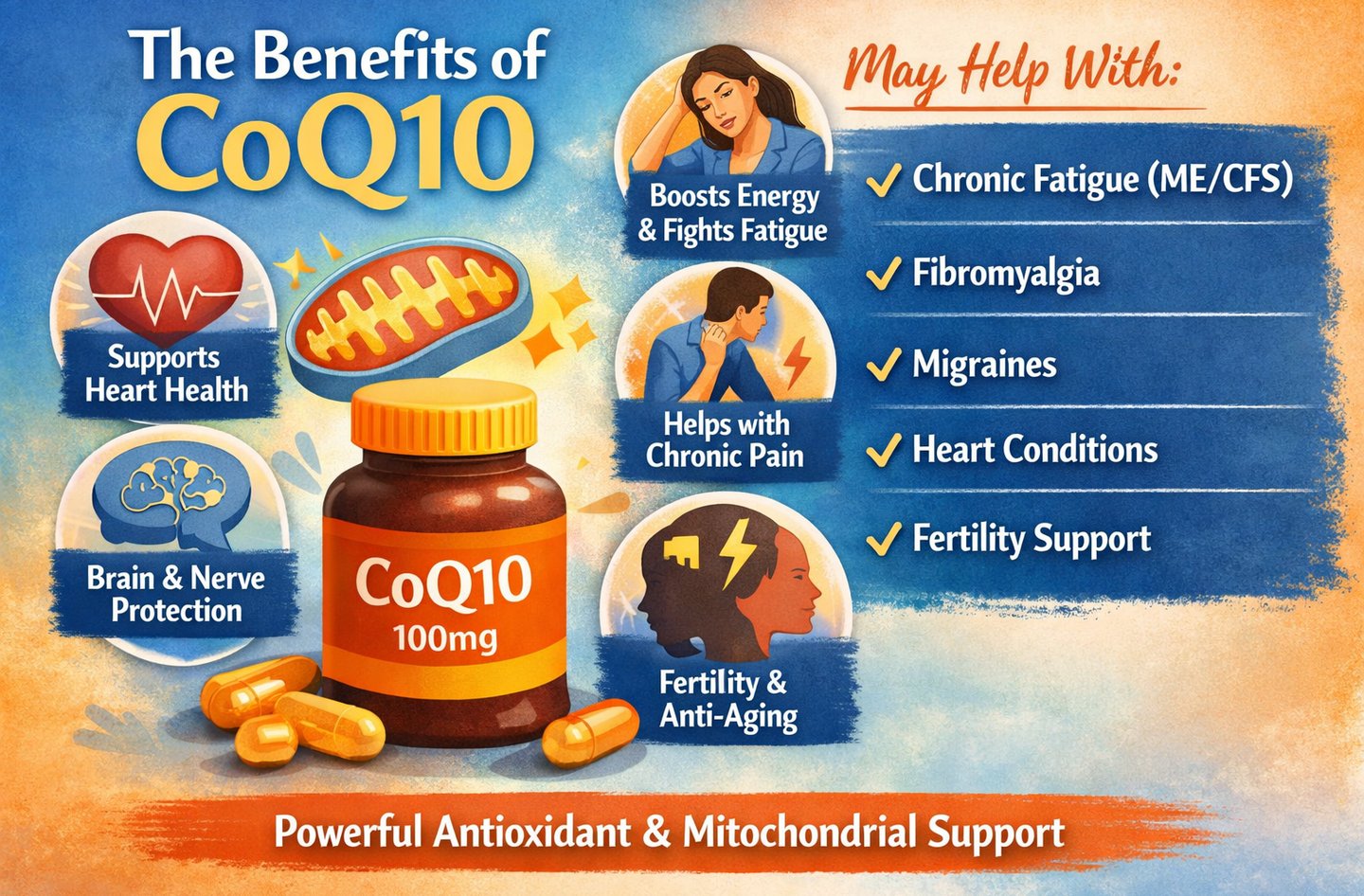
Co-enzyme Q10 (CoQ10) is a naturally occurring compound found in every cell of the body. It plays a central role in energy production, cellular protection, and mitochondrial health — making it particularly relevant in conditions where fatigue, pain, or reduced cellular resilience are prominent.
Although our bodies make CoQ10, levels decline with age, chronic illness, stress, and certain medications. Supplementation has therefore become an area of growing clinical interest.
What does CoQ10 do in the body?
CoQ10 has two main roles:
1. Energy production (mitochondrial support)
CoQ10 is essential for the production of ATP, the body’s energy currency. It sits within the mitochondria — often described as the cell’s “power plants” — helping convert nutrients into usable energy.
When CoQ10 levels are low, energy production can become less efficient, contributing to fatigue, muscle weakness, and reduced stamina.
2. Antioxidant protection
CoQ10 is also a powerful antioxidant, helping to neutralise free radicals and protect cells from oxidative damage. This is particularly important in conditions associated with:
Chronic inflammation
Oxidative stress
Accelerated cellular ageing
Conditions where CoQ10 may be beneficial
Research suggests CoQ10 may be helpful across a range of conditions, particularly those involving fatigue, mitochondrial dysfunction, or oxidative stress.
1. ME/CFS and chronic fatigue
One of the best-studied areas for CoQ10 is myalgic encephalomyelitis / chronic fatigue syndrome (ME/CFS).
People with ME/CFS have been shown to have lower blood levels of CoQ10
Randomised controlled trials suggest CoQ10 (often combined with NADH) may improve:
Fatigue severity
Quality of life
Post-exertional symptoms in some patients
While it is not a cure, CoQ10 is often used as part of a mitochondrial support strategy.
2. Fibromyalgia and chronic pain
Fibromyalgia is associated with:
Increased oxidative stress
Impaired mitochondrial function
Studies suggest CoQ10 supplementation may help reduce:
Pain intensity
Fatigue
Tenderness
Some patients also report improvements in brain fog and sleep quality, although responses vary.
3. Migraine
CoQ10 is one of the few supplements with good evidence in migraine prevention.
Clinical trials show it may:
Reduce migraine frequency
Shorten attack duration
Lower severity
It is commonly recommended by headache specialists due to its favourable safety profile.
4. Cardiovascular health
CoQ10 plays an important role in heart muscle energy production.
Evidence suggests benefits in:
Heart failure (improving symptoms and exercise tolerance)
Hypertension (small reductions in blood pressure)
Statin-associated muscle pain (as statins reduce endogenous CoQ10 levels)
5. Neurodegenerative and neurological conditions
Because of its antioxidant and mitochondrial effects, CoQ10 has been studied in conditions such as:
Parkinson’s disease
Multiple sclerosis
Neuroplastic and central sensitisation conditions
While results are mixed, interest remains strong, particularly in early or supportive care contexts.
6. Fertility and healthy ageing
CoQ10 levels decline with age, and supplementation has been explored for:
Egg and sperm quality
Age-related fatigue
Cellular ageing and resilience
It is increasingly used in pre-conception care and longevity-focused health plans.
Forms and dosing
CoQ10 is fat-soluble and best taken with food.
Ubiquinone: standard form, widely studied
Ubiquinol: more bioavailable, often preferred in older adults or those with absorption issues
Typical doses used in practice range from 100–300 mg daily, depending on the condition and individual tolerance.
Safety and tolerability
CoQ10 is generally very well tolerated.
Possible side effects (uncommon and usually mild):
Nausea or stomach upset
Headache
Insomnia if taken late in the day
It may interact with warfarin and can slightly lower blood pressure, so clinical supervision is advised for some individuals.
Final thoughts
Co-enzyme Q10 is not a quick fix — but for the right person, it can be a valuable part of a broader, personalised treatment approach, particularly where fatigue, pain, or mitochondrial dysfunction are present.
As with all supplements, context matters: underlying conditions, medications, nutrition, pacing, and nervous system health all influence outcomes.
If you’re considering CoQ10, working with a knowledgeable practitioner can help ensure it’s used safely, effectively, and appropriately.
Get in touch
Subscribe to the mailing list (your details will not be shared)
GPhC registration, Claire Rice 2082362
The Coaching Pharmacist Ltd Company number 16802064 registered in England